Sunday, May 31, 2015

Period four- joint stock company

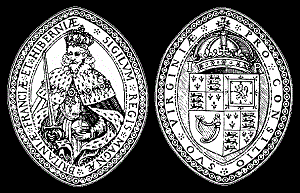
Joint-stock company is a business entity where different stocks can be bought and owed by shareholders. Each shareholder owns company stock in proportion, evidenced by his or her shares (certificates of ownership). Back in the 1700s, joint-stock companies were established by powerful nations in developing countries for the exploitation of trade. Originally, the company was economic based only but they eventually became more influential and began to involve in the country’s politics.
The emergence of joint stock company had significant impact during the period. Among the companies, the British East India Company was the most influential one during the 18th century. It was sponsored by the British government and were granted spice trade monopoly in the East Indies. As the company dilated, it started to involved in India’s politics and acted as an agent of British imperialism in India from the early 18th century to the mid-19th century.
Nowadays, joint stock company is an association of individuals in a business enterprise with transferable shares of stock,much like a corporation except that stockholders are liable for the debts of the business. This is a significant transformation in which people can now invest the company that they believe would make a profit from it as long as they pay for the stock. This enables a variety of people to participate in economic activities instead of limited the investment to only the members of social elites.
SPICE
Political- empires: The idea of gaining control of a territory by setting up trading post led to the formation of several trading-post empire. The influences such as language and culture brought by mother countries can still be observed in their colonies nowadays. An example is that English still remains as a dominant language in India.
Economic- capitalism: The unequal share of stocks between the shareholders is an example of capitalism. The more share a person owns, the more profit will be gained by that person. But on the other hand, the more money the person will lose if the company is not well-functioned.

E. (2015). East India Company | English trading company. Retrieved from

Saturday, May 30, 2015

Period four- Gunpowder

Gunpowder technology originated in China, which the Chinese used to fight the Mongols. After the thirteenth century, the Chinese domination of gunpowder technology ended and the technique was passed along the ancient silk road to Europe and Islamic world. This led to the formation of the three gunpowder empires and moreover, the later on widespread imperialism is also a result precipitated from the gunpowder technique.
Gunpowder contributed largely to the expansion of certain empires and the death of innocent people during the period. The emergence of the gunpowder empires: Safavid, Ottoman and Mughal, was made possible by the gunpowder weapons that enabled the empires to conquer nearby territories, such as cannon. Moreover, European empires that adopted the technology began to set up colonies in the New World by defeating local citizens using gunpowder weapons.
Besides its impacts during the period, gunpowder weapons are responsible for the massive negative impacts throughout world history. Wars became more destructive as weapons advanced and caused more damages. It also increases the tension between nations as war turns into larger scales and more naitons are involved. Eventually this situation led to the arms race.
SPICE
Political- empire: The spread of gunpowder technology acted as the catalyst of the formation of the Ottoman, Safavid and Mughal empire. By using gunpowder weapons, the Muslims could easily conquer nearby territories that had relatively less advanced military power.
Political- Nations and nationalism: Gunpowder weapon marks the start of modern military technique in which stronger nations invented destructive weapons in order to demonstrate the nation’s power. This is due to the sense of nationalism and eventually the tension between nations merged into significant wars that caused millions of human death.
Economic- trade and commerce: Gunpowder technology was spread from China to Europe via the Silk Road during the earlier time period; Nowadays, gunpowder is sometimes sold by illegal merchants who sought to make profit.

Whipps, H. (2008, April 06). How Gunpowder Changed the World. Retrieved from

Wednesday, May 27, 2015

Period four- Heliocentric Theory

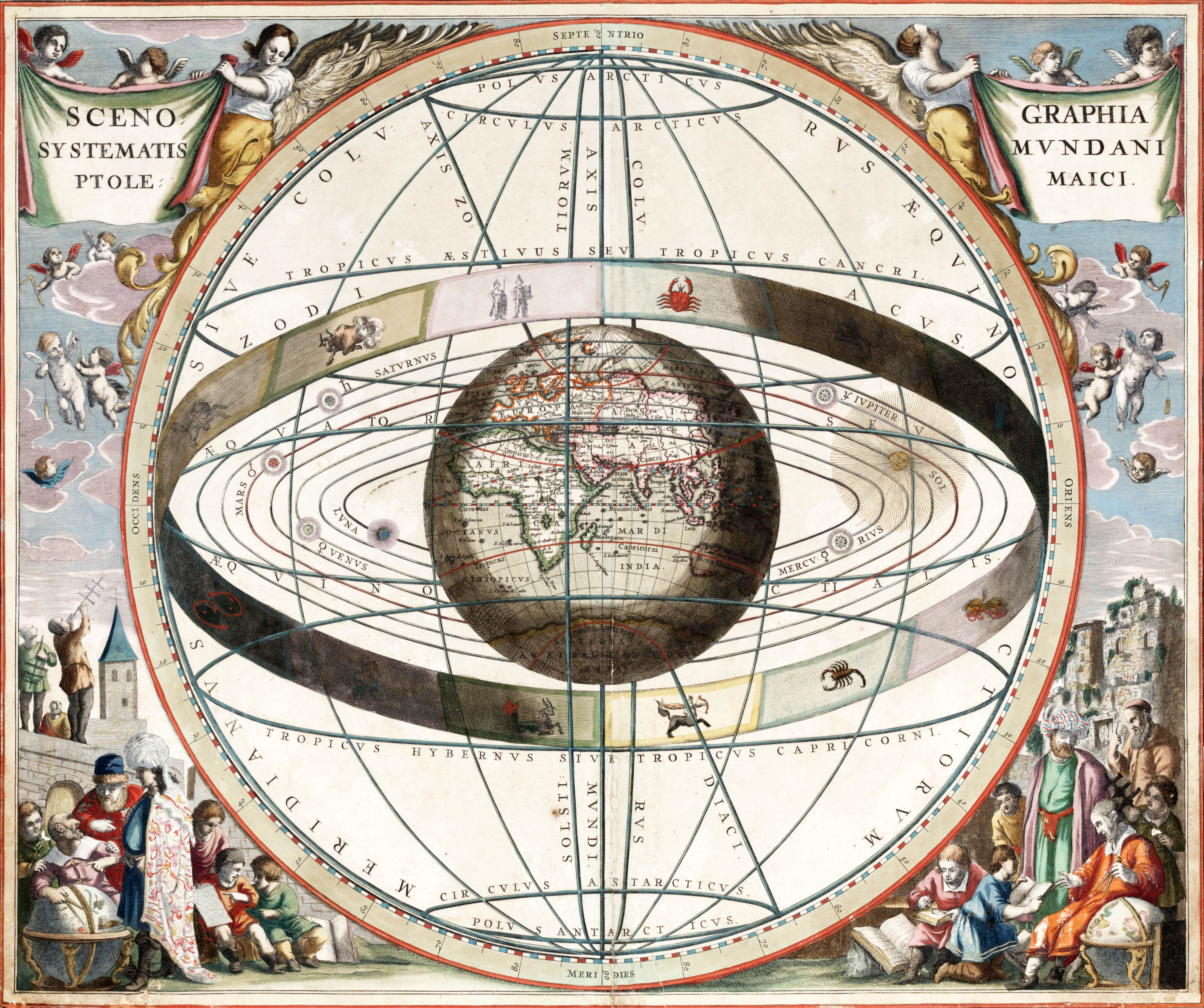
The heliocentric model is a theory observed by Copernicus that places the Sun as the centre of the universe, and the planets orbiting around it. The heliocentric model replaced geocentrism, which is the belief that the Earth is the centre of the universe, as new invented technology allowed the scientists to approach new discovery.
The idea of sun instead of Earth is at the centre of universe challenged the Roman Catholic church, who had a powerful force at that time period and suppressed Copernicus’ thought. In opposition to the religious belief of geocentric theory, the heliocentric theory is an evidence that people were moving towards enlightenment thinking in which people began to stressed scientific evidences instead of vogue religious believes.
The heliocentric theory plays an important role in world history not only because of its significant discovery of the universe but also its challenge towards traditional ideas, which led to the later on period of enlightenment.
SPICE
Interation between human and the environment- technology: The discovery of the actual structure of the universe is a huge step-forward in the realm of astronomy. It also proves that the technology at that time period was advanced enough to support the observation of universe.
Cultural- Belief system: The biggest challenge faced by the Heliocentric theory was the opposition of Roman Catholic church, who believed in every everything claimed by God. However, the fact that the heliocentric theory eventually replaced geocentric proves that the era of scientific thinking had begun as religious influence weakened.

Left: heliocentric model
Right: geocentric model
Cessna, A. (2009, June 22). Heliocentric Model. Retrieved from
Picture source: en.wikipedia.org


Period three- Epic of Sundiata

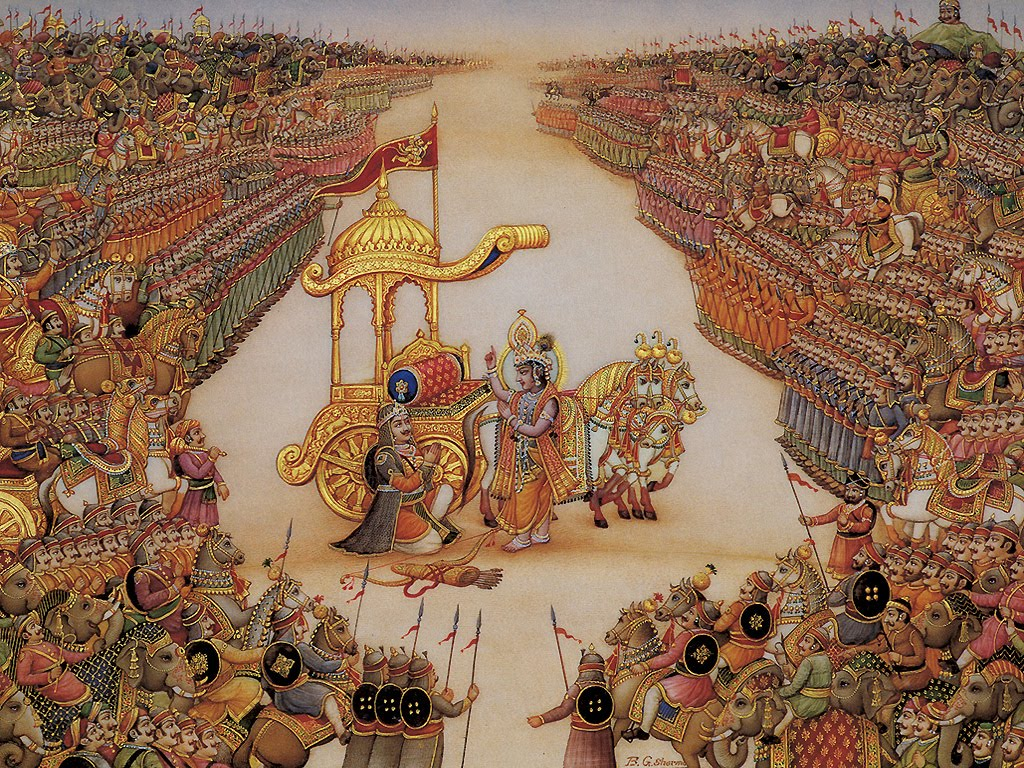
Sundiata Epic is an epic poem of the Malinke people and tells the story of the hero Sundiata Keita, the founder of the Mali Empire and the rise of the Mali Empire in the thirteenth century. The influence of Islamic belief is extensively stated in the epic in which Mansa Musa, the successor of Sundiata,launched an elaborate pilgrimage to the holy city, Mecca. Although the arrival of Islam did not completely replace the existing religion, as a large group of merchants and rulers accepted the religion, Mali was placed within the network of Islamic nations and trade patterns.
The epic was handed down by the generations orally by griot poet,  unlike the ancient sumerian’s Epic of Gilgamesh, which was recorded in cuneiform on twelve stone tablets. This suggested the different methods of record keeping in Mesoamerica and Africa throughout the change of time.
The Sundiata Epic is an excellent example of the tension between the traditional religious role of West African king and the growing influence of Islam in Africa. The arrival of Islam is largely due to the increase of trade and commerce. It also reflects the changing views of the regional audience. As the region became more Islamic, so did the portrayal of Sundiata.
SPICE
Political- empires: the epic describes the process of the formation of Mali empire. The empire began to prosper when they came to control the gold and salt trade. An example that illustrated the wealth of the empire was Mansa Musa’s elaborate pilgrimage to Mecca, which accompanied gold, thousands of people and camels.
Cultural- religion: Due to Islamic influence brought by the merchants through interregional trade, and the adoption of Islam by the ruler of Mali Empire, the empire became one of the most powerful Sudanic empire. This artifact is important in which it demonstrates how influential a religion could be to affect the development of a massive empire.


Sullivan, M. (n.d.). The Epic of Sundiata. Retrieved from
  Picture source: worldofthemerry.wordpress.com

Monday, May 25, 2015

Period three- Compass

The magnetic compass was first invented as a device for divination as early as the Chinese Han Dynasty (since about 206 BC) and later adopted for navigation by the Song Dynasty Chinese during the 11th century.The use of a compass is also recorded in Western Europe and in Persia around the early 13th century. Earlier compass was made of lodestones and later ones were made of iron needles.
Zhang He’s voyages during the early Ming Dynasty is an example that benefited from the compass. He reestablished the Chinese tributary states and elevated the Chinese maritime power. The invention eventually led to the later Age of Discovery by enabled the Europeans to travel across the Atlantic to the New World.
The significance of this artifact is that it proven the existence of scientific thoughts in which people began to study science, trying to apply science to technology. The largely increase maritime voyages followed up by the spread of compass is the best proof.
SPICE
Political- Empires: Colonies were set up by empires due to the sudden increased of oversea discovery. Thanks to the compass! People gained more understanding about the geography of Earth and the idea of maritime travel spread among the world.
Economic- trade and commerce: As oversea empires were created, the mother countries set up trading post in their colonies. Goods were exchanged between the Old and New World while cultures and ideas spread among different civilizations.


C. (2003). Four Great Inventions of Ancient China -- Compass. Retrieved from

Picture source: commons.wikimedia.org

Sunday, May 24, 2015

Period three- Printing

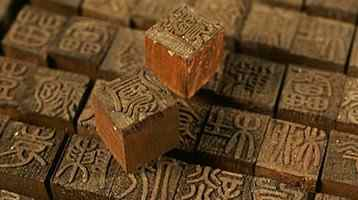
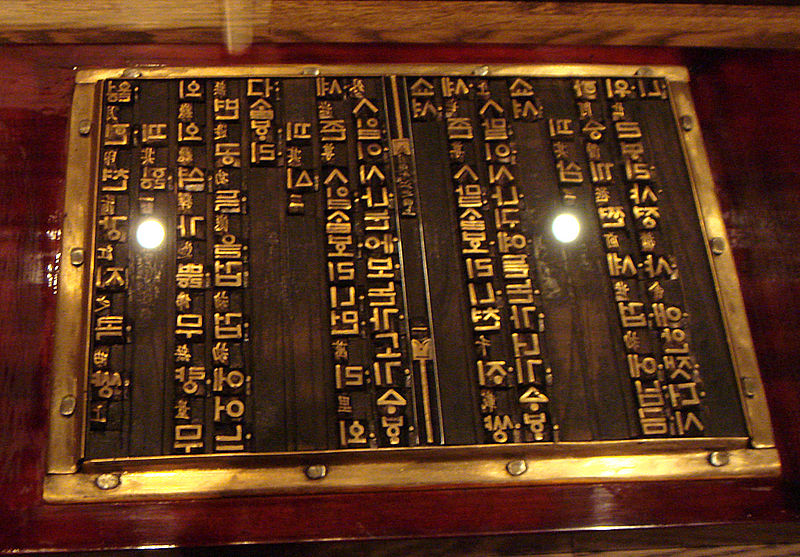
The evolution of printing began with the invention of woodblock printing to the movable type printing. Woodblock printing is a technique for printing text, images or patterns using carved stamps that was adopted widely throughout East Asia. Nevertheless, due to its time and energy consuming features, the movable type printing invented by a Chinese man called Bi Sheng eventually replaced woodblock printing. Each piece of movable type had one Chinese character on it, which was carved in relief on a small block of moistened clay. After the block had been hardened by fire, the movable type became hard and durable and could be used wherever required.
This printing technique contributed enormously to the increasing educated rate of common people in which more books were printed and reading was no longer a privilege limited to the elite class. Besides its social impact, the printing technique also accelerated the spread of culture and ideas, which eventually led to the later on development of enlightenment thinking. The invention of printing is a huge step forward in the process of evolution of record keeping, which transformed the ancient stone carving, quipu and oral tradition to a more convenient form.
SPICE
Social- social and economic classes: The increasing amount of population that were able to read shorten the social gap between the upper and lower class citizens. The easier access to knowledge promoted further education of common people.
Cultural- religion and ideology: The printing technique caused the mass production of books including the Bible. This led to the Protestant Reformation led by Martin Luther in which people could now gained access to the Bible and they began to question the authority of priests. Moreover, the invention of printing also promoted cultural diffusion that spread among the world.


C. (2003). Four Great Inventions of Ancient China -- Printing. Retrieved from

Picture source: www.absolutechinatours.com

Period two- Lateen ship

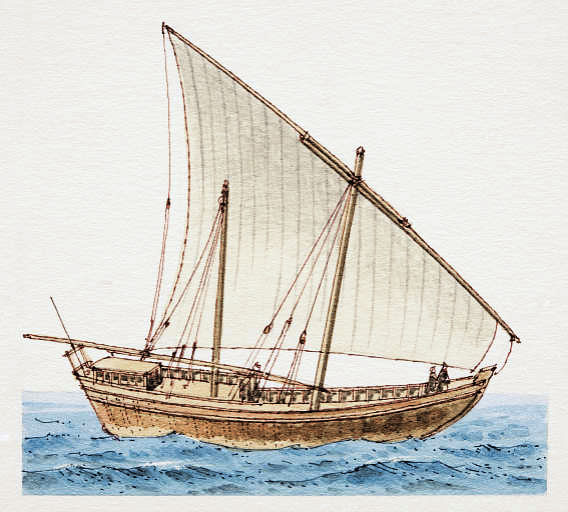
Lateen sail, the triangular sail that was of major importance to medieval navigation. The ancient square sail permitted sailing only before the wind; the lateen was the earliest fore-and-aft sail. The triangular sail was affixed to a long yard or crossbar, mounted at its middle to the top of the mast and angled to extend aft far above the mast and forward down nearly to the deck. The sail, its free corner secured near the stern, was capable of taking the wind on either side, and, by enabling the vessel to tack into the wind, the lateen immensely increased the potential of the sailing ship.
Based on the theory, lateen ship was most likely originated from Persia or Arab in which Muslim sailors were responsible for introducing the lateen sails to the Mediterranean. Following its widespread in Mediterranean, it endured a massive diffusion in the Indian Ocean Basin. Commerce and trade were boosted by the sail that cooperated with the monsoon wind. The invention of lateen ship represents the new discovery of technology and the further understanding of the environment. Human could now expand on the structure of the lateen sail and process it into a more advance transportation tool.
SPICE
Interaction between human and the environment- technology: the unique structure of the lateen sail that allows it to go against the wind combined with the advantage of the monsoon wind enabled the sail across the ocean to be more convenient.
Cultural- science and technology: The lateen sail fixed the flaws of the earlier square sails in which now sail towards any direction without being disturbed by the wind.
Economy- trade and commerce: Lateen ship contributed to the prosperity of the Indian Ocean and Mediterranean trade commerce by enabled more efficient sailing.


Lateen sail | sail. (2015). Retrieved from